7 min read•Published 2026-09-30
Air Fryer vs. Convection Oven: The Definitive Thermodynamic Breakdown
Both appliances use convection fans to circulate dry heat, but significant differences in airspeed, chamber volume, and thermal density dramatically affect crispiness.

Marcus VanceLead Kitchen & Appliance Tester
Save / Share:Pin to Board
Essential Executive Summary
- •An air fryer is essentially a miniaturized, ultra-high-velocity convection oven.
- •Air fryers cook 20% to 35% faster than countertop convection ovens due to concentrated airspeed.
- •Convection toaster ovens excel at flat single-layer baking (cookies, pizzas) where volume matters.
- •Air fryers use up to 60% less energy than full-sized ranges for small weeknight dinners.
### The Core Engineering Difference: Air Velocity vs. Chamber Volume
At a fundamental mechanical level, **air fryers and convection ovens operate on the identical thermodynamic principle**: a heating element generates thermal energy, while a motorized fan forces that hot air across the surface of food to strip away surface moisture via forced convection.
However, the key difference lies in the **ratio of fan velocity to cooking chamber volume**.
1. Air Fryer Physics A typical basket air fryer encloses a compact chamber of only 4 to 6 quarts (roughly 0.15 to 0.20 cubic feet). Directly above the food basket sits a high-RPM convection fan driven by a 1500–1700 watt heating coil. Because the volume is so small, the fan creates **turbulent, high-velocity airflow** that constantly strips away the cooling boundary layer of steam surrounding your food. This accelerated dehydration produces the trademark golden-brown, shattering crisp crust within minutes.
2. Convection Oven Physics A standard countertop convection toaster oven has a chamber volume of 0.8 to 1.2 cubic feet—nearly **six times larger** than an air fryer basket. While it has a fan, the airspeed is gentle and laminar to prevent blowing away delicate soufflés or cake batters. It bakes evenly across a sheet pan, but cannot replicate the concentrated searing intensity of a dedicated air fryer.
Quick Decision Matrix: Which One Fits Your Cooking Style?
| Factor | Dedicated Basket Air Fryer | Countertop Convection Oven |
|---|---|---|
| Browning & Crispiness | Superior (Intense high-velocity convective airflow) | Moderate (Gentle convective airflow) |
| Preheat Time | 2–3 Minutes | 8–12 Minutes |
| Cooking Capacity | Limited (Best for 1–4 servings) | High (Fits 12" pizza, 6 toast slices) |
| Ease of Cleaning | Very High (Nonstick basket goes in dishwasher) | Moderate (Crumb trays and wire racks) |
| Baking Cakes/Cookies | Poor (Violent airflow can warp batters) | Superior (Gentle uniform heat) |
| Energy Consumption | Lowest | Moderate |
Conclusion & Final Recommendation If your primary priority is rapid weeknight cooking—reheating takeout pizza to crisp perfection, blistering chicken wings, or roasting broccoli in 12 minutes—**a dedicated basket air fryer like the Instant Vortex Plus or Ninja AF101 is the clear winner**. If you routinely bake 9x13-inch casseroles, roast full-sized artisan sourdough loaves, or toast six bagels simultaneously, stick with a full-size countertop convection oven.
Sponsored Advertisement
Recommended Products Mentioned in This Guide
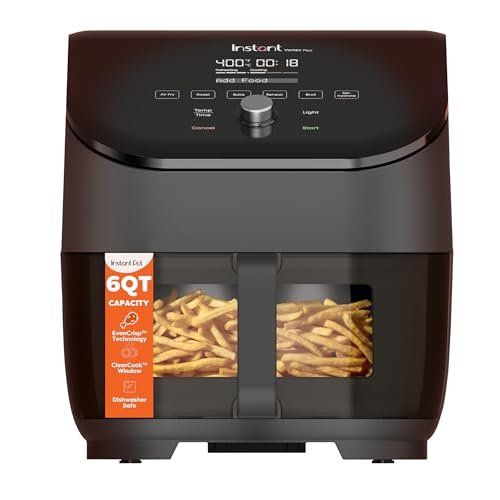
Instant Vortex Plus 6-in-1 6-Quart Air Fryer with ClearCook
Score: 9.4 / 10$129.95Check Price
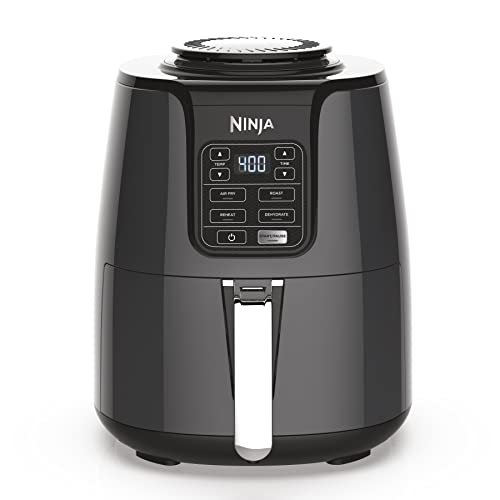
Ninja AF101 4-Quart Air Fryer
Score: 9.1 / 10$89.99Check Price
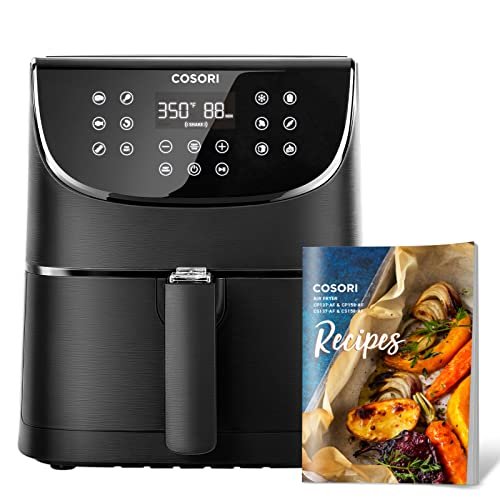
Cosori Pro II 5.8-Quart Air Fryer
Score: 8.9 / 10$99.99Check Price