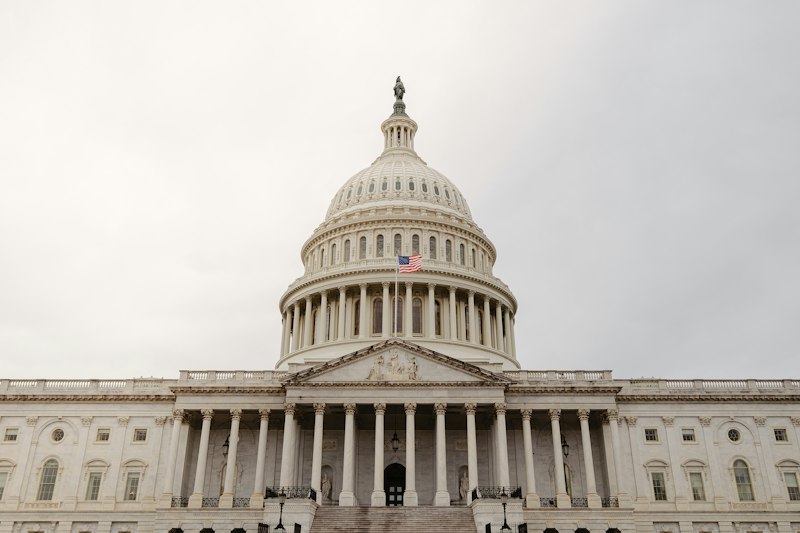
Every four years, Americans go to the polls to vote for president, and every four years, a significant number of them are surprised to learn they are not actually voting for president directly. They are voting for a slate of electors who are pledged to a candidate, and it is those electors, meeting weeks later, who formally elect the president. This system — the Electoral College — is one of the most distinctive and most debated features of American democracy, and understanding how it actually works is the first step to understanding why it remains controversial more than two centuries after it was created.
The Basic Mechanics
Each state is allocated a number of electors equal to its total representation in Congress: the number of U.S. Representatives it has (based on population) plus its two U.S. Senators. Washington, D.C., which has no voting representation in Congress, is granted three electors under the 23rd Amendment. This brings the total number of electors nationwide to 538, meaning a candidate needs 270 electoral votes — a simple majority — to win the presidency.
When voters cast a ballot for a presidential candidate, they are technically voting for that candidate's slate of electors in their state. In 48 states and Washington, D.C., the system is winner-take-all: whichever candidate wins the most votes in that state receives all of that state's electoral votes, regardless of the margin. Maine and Nebraska are the exceptions, using a proportional method that can split their electoral votes between candidates based on results in individual congressional districts.
After the popular vote is certified in each state, the chosen electors formally meet in their respective state capitals in December to cast their official votes, which are then sent to Congress to be counted and certified in a joint session in early January, with the winner inaugurated later that month.
Why the Founders Created It
The Electoral College was a compromise forged during the Constitutional Convention of 1787, and like most compromises, it reflected several competing concerns rather than one single design goal.
A compromise between popular and congressional selection. Some delegates wanted the president chosen directly by popular vote; others worried that voters in distant states would have no reliable way to evaluate candidates from other regions in an era without mass media, and preferred letting Congress choose. The Electoral College split the difference: electors chosen by each state, reflecting a mix of popular input and structured deliberation.
A compromise between large and small states. Because a state's elector count combines its House seats (population-based) and Senate seats (fixed at two per state), smaller states receive a slightly larger voice per capita than they would under a purely population-based popular vote — a feature intentionally mirroring the same large-state/small-state compromise that produced the two-chamber Congress itself.
A concession tied to slavery. In the South, the elector allocation based on total congressional representation was directly connected to the three-fifths compromise, which counted enslaved people (who could not vote) toward a state's population for representation purposes, thereby inflating the elector counts of slaveholding states relative to their actual voting population. This history is a significant part of modern scholarly criticism of the system's origins.
A practical mechanism for a pre-modern country. In an era of extremely slow communication and travel, having states run their own elections and send trusted electors to a fixed process was viewed as more logistically workable than a single, nationally administered popular vote.
Common Misconceptions
"Electors can vote however they want." In most states, electors are legally bound, or strongly expected by tradition and party loyalty, to vote for the candidate who won their state. Electors who break this pledge are called "faithless electors," and while historically rare and never having changed the outcome of an election, a 2020 Supreme Court ruling (Chiafalo v. Washington) confirmed that states have the constitutional authority to legally bind and even penalize faithless electors, closing off what had been a point of ambiguity.
"The candidate with the most total votes nationwide always wins." This is not guaranteed, and it is the single most consequential feature of the system. Because electoral votes are awarded state by state rather than through one national tally, it is mathematically possible — and has happened multiple times in U.S. history — for a candidate to win the presidency while receiving fewer total popular votes nationwide than their opponent. This scenario, sometimes called an "electoral-popular vote split," is the central flashpoint in modern debates about the system.
"Every voter's vote carries equal weight." Because of the fixed two-senator-per-state baseline combined with winner-take-all rules in most states, a vote cast in a smaller state carries more electoral weight per voter than a vote cast in a larger state, and a vote cast in a noncompetitive "safe" state has less practical influence on the outcome than a vote cast in a closely contested "swing" state, since the losing side's votes in a winner-take-all state do not contribute any electoral votes at all.
The Case For the System
Supporters of the Electoral College generally argue that it:
- Preserves a federal structure, ensuring presidential candidates must build broad, geographically distributed coalitions across many states rather than simply maximizing turnout in the highest-population urban centers.
- Provides clear, contained outcomes, since a close national popular vote could trigger recounts across the entire country simultaneously, whereas the Electoral College generally localizes recount disputes to specific contested states.
- Reflects the country's design as a union of states, consistent with other features of American government, like the Senate, that intentionally give states influence independent of pure population.
The Case Against It
Critics generally argue that it:
- Can produce outcomes at odds with the national popular will, which they view as fundamentally at tension with democratic principles.
- Effectively concentrates campaign attention on a small number of competitive "swing states", while candidates have comparatively little incentive to campaign in, or address the specific concerns of, states considered safely won or lost in advance.
- Carries forward a design element tied to historical injustice, given the connection between the original elector formula and the three-fifths compromise.
Is Reform Possible?
Formally abolishing the Electoral College would require a constitutional amendment, which needs two-thirds approval in both houses of Congress and ratification by three-quarters of the states — an extremely high bar that has not been reached for this issue despite periodic proposals.
Short of a full amendment, the most prominent reform effort is the National Popular Vote Interstate Compact, an agreement among participating states to award all of their electoral votes to whichever candidate wins the national popular vote, regardless of who wins that individual state — effectively achieving a popular-vote outcome without a constitutional amendment. The compact only takes effect once enough states representing a majority of electoral votes (270) have joined, and as of recent years it has been adopted by a substantial number of states, though it remains short of the threshold needed to take effect and continues to face both legal and political challenges.
The Bottom Line
The Electoral College is often discussed as though it were a simple design flaw, but it is more accurately understood as the product of several distinct compromises — over federalism, over large-state and small-state power, and, uncomfortably, over slavery — bundled into one mechanism that has outlived the specific circumstances that produced it. Whether you view it as an essential safeguard of federal balance or as an outdated obstacle to direct democracy, understanding its actual mechanics is what separates an informed opinion from a purely instinctive one — and on a system this consequential, that distinction matters.